i am traffic
  • Our Vision
    • Equity & the 6 Es
  • Equality
    • U.S. Bicycle Laws by State
  • Education
    • For Adult Bicyclists
    • For Children
    • For Engineers
    • For Law Enforcement
  • Engineering
    • Understanding Bicycle Transportation
      • Key Policies/Goals
      • Bicyclist Safety and Law Enforcement
      • Cycling Behavior Spectrum
      • Bicycle Driver Behavior Importance
      • Crash Risk vs Cyclist Behavior
      • The 6Es of Bicycling Support (part 1)
      • The 6Es of Bicycling Support (part 2)
      • Inclusive Planning/Engineering
      • Exercise 1: Facility Feature Recognition
    • Infographics
  • Enforcement
  • Encouragement
  • Evaluation
    • Lane Control Survey
  • Search
  • Menu Menu

Tag Archive for: bicycling

Woodville Highway, Woodvile, FL, from Billy hattaway presentation

Florida Complete Streets Initiative

November 23, 2024/in Engineering/by Billy Hattaway

Billy Hattaway of the Florida Department of Transportation describes issues with bicycle and pedestrian access and connectivity, and measures to create complete streets, in a talk recorded at the American Bicycling Education Association’s 2016 I Am Traffic II conference in St. Louis, Missouri.

Billy Hattaway portrait
Billy Hattaway

Billy Hattaway, PE, MBA, MSp1, PE, MBA, RSP1 has served with the Florida Department of Transportation, driving change in the development of safety and complete streets initiatives and earning multiple awards, with with Fehr and Peers and England, Thims and Miller consulting firms and as the City of Orlando as Transportation Director, leading the development of Vision Zero policy and action plans. He has also held numerous transportation-related volunteer positions.

https://iamtraffic.org/wp-content/uploads/2024/11/hattaway-featured.jpg 444 475 Billy Hattaway https://iamtraffic.org/wp-content/uploads/2013/02/iat_fb_profile2-300x300.jpg Billy Hattaway2024-11-23 18:52:172025-02-06 16:35:33Florida Complete Streets Initiative

What Police Need to Learn about Cycling

December 18, 2014/in Education, Enforcement/by Tamar Wilner

In part 3 of his comprehensive overview of police and cycling, Kirby Beck explains:

  • What police need to learn
  • How to get heard by your local police department
  • Why changes in police departments need to come from the top
  • Plus: why you need the AAA on your side.

“You need to start reporting things,” Kirby urges cyclists. “They’re not going to know it’s a problem if they don’t hear from you and hear from your friends.

“Now I know the cops will go, ‘Why did you tell them that? That’s all we need is more calls.’ Too bad! Too bad.

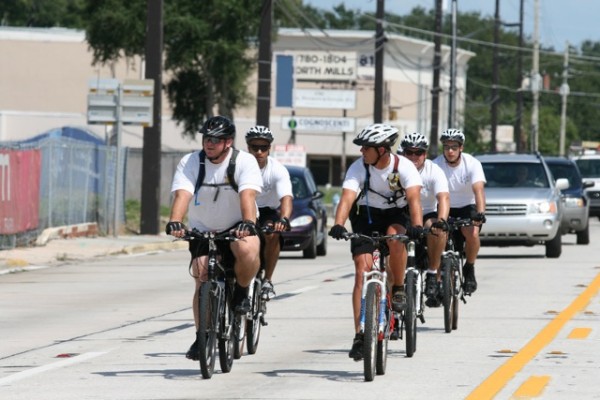
Police officers riding double file on Mills Street, Orlando, Florida

“See, I’m not going to be happy until we don’t have to have special programs to do bike enforcement because it’s part of what cops do every day, we don’t have to spend a lot of money on bike lanes and other facilities because we’ve got roads, and people can use those roads. They’re there for everybody, it’s a public right-of-way.”

Beck is a retired police officer and a trainer with the International Police Mountain Bike Association. In Part 1 of this series, he took us through the fascinating history of police cycling, and gave an overview of the current state of enforcement of bicycle law – or lack thereof. In Part 2, Beck explained how to deal with police citations and how to effectively report incidents to 911.
Tamar Wilner
Tamar Wilner

I am an assistant professor at the William Allen White School of Journalism and Mass Communications at the University of Kansas. I also serve as Chief Bridge-Builder for the Journalism Bridging Project, a collaborative effort to draw news outlets and academic researchers together through initiatives big and small.

tamarwilner.com
https://iamtraffic.org/wp-content/uploads/2014/12/police-square.png 308 342 Tamar Wilner https://iamtraffic.org/wp-content/uploads/2013/02/iat_fb_profile2-300x300.jpg Tamar Wilner2014-12-18 10:14:432024-11-09 10:31:11What Police Need to Learn about Cycling

Police Have Issued You a Cycling Citation. Now What?

October 8, 2014/1 Comment/in Enforcement/by Tamar Wilner
cycling law enforcement

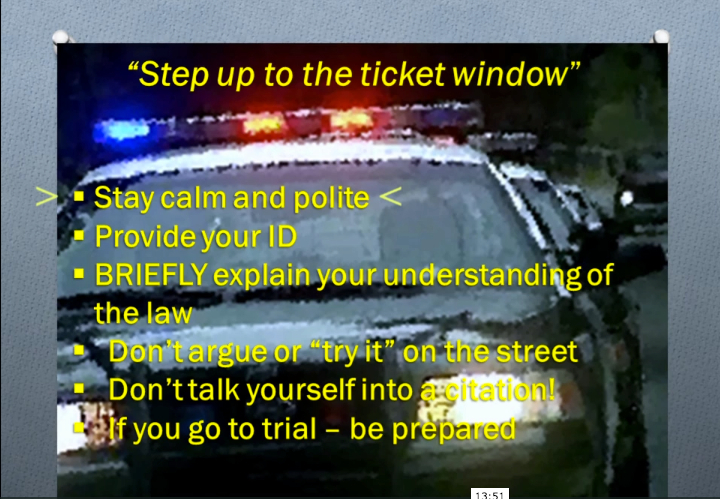
In part 2 of his comprehensive overview of cycling law enforcement, Kirby Beck explains:

  • What police mean when they describe something as a “problem” (hint: it’s different from how you or I might use the word)
  • How to effectively report incidents to 911
  • How to deal with police citations (step one: stay calm!)

Beck is a retired police officer and a trainer with the International Police Mountain Bike Association.

In Part 1 of this series, Beck took us through the fascinating history of cops on bikes, and gave an overview of the current state of cyclign law enforcement – or lack thereof. In part 3, he will discuss what police need to learn about cycling law enforcement.

Tamar Wilner
Tamar Wilner

I am an assistant professor at the William Allen White School of Journalism and Mass Communications at the University of Kansas. I also serve as Chief Bridge-Builder for the Journalism Bridging Project, a collaborative effort to draw news outlets and academic researchers together through initiatives big and small.

tamarwilner.com
https://iamtraffic.org/wp-content/uploads/2014/10/beck2.png 417 462 Tamar Wilner https://iamtraffic.org/wp-content/uploads/2013/02/iat_fb_profile2-300x300.jpg Tamar Wilner2014-10-08 13:13:212024-11-09 11:14:14Police Have Issued You a Cycling Citation. Now What?

Cyclists and Law Enforcement: History and Overview

September 7, 2014/1 Comment/in Enforcement/by Tamar Wilner

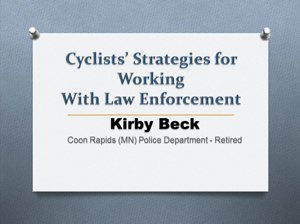
Kirby Beck is a retired police officer, instructor and trainer with the International Police Mountain Bike Association. In this series of videos, Beck gives a comprehensive overview of cyclists and law enforcement. Beck takes us through the fascinating history of cops on bikes, from the early police officers who stopped speeding horses, to the bike-based rapid response team that kept anarchists from burning St. Paul during the 2008 Republican National Convention. Plus, we get an amusing look back at 1970s TV cop show Adam 12, in which the protagonists clock a neighborhood cyclist at 45 mph.

Beck also gives an overview of the current state of enforcement of bicycle law – or lack thereof. Frustratingly for bike advocates, Beck says,

“Virtually no officers I have ever spoken with have had any kind of specialized training in bicycle laws or bicycle enforcement, anywhere in this country. The most they get is at rookie school where they are given the traffic code and [are told to] read it and memorize it….

“There is nothing in their background, except for the same biases that every other motorist on the road has. So that’s what you’re dealing with and it’s not intentional. It’s just they don’t know any better.”

In Part 2, Beck describes what police mean when they describe something as a “problem.” Hint: it’s different from how you or I might use the word. Kent also describes how to effectively report incidents to 911. He tells how to deal with police who cite you with cycling violations. In Part 3, he explains what police need to learn and how to get heard by your local police department.
Tamar Wilner
Tamar Wilner

I am an assistant professor at the William Allen White School of Journalism and Mass Communications at the University of Kansas. I also serve as Chief Bridge-Builder for the Journalism Bridging Project, a collaborative effort to draw news outlets and academic researchers together through initiatives big and small.

tamarwilner.com
https://iamtraffic.org/wp-content/uploads/2014/09/beck-with-screen.png 444 501 Tamar Wilner https://iamtraffic.org/wp-content/uploads/2013/02/iat_fb_profile2-300x300.jpg Tamar Wilner2014-09-07 12:34:272024-11-09 11:46:53Cyclists and Law Enforcement: History and Overview

Follow us on Facebook

Keri Caffrey on bicycle
Keri Caffrey


I am a technical illustrator and graphic designer with over 30 years as an urban bike commuter, recreational group rider and ride leader. I am convinced that the greatest challenges facing American bicycling are a lack of education and a destructive belief system about our public roads.

Through CyclingSavvy, Mighk Wilson and I created a toolset for bicyclists to enhance their preferred style of riding. Together, we can transform our traffic culture to recognize that roads are for all people, not just motorists.

© Copyright - i am traffic - Enfold WordPress Theme by Kriesi
Scroll to top